A marked 'Confidential Report' ended up on my desk last month—not through official channels。but via a contact who found it in a shared drive. The report detailed a failed product launch, complete with names of engineers blamed for delays. Within hours, I traced its origin to a mid-level manager who had emailed it to a colleague using a personal Gmail account. The document's header screamed 'Confidential,' yet no one had bothered to encrypt it or track its distribution. That lapse cost the company a lawsuit and two resignations.Confidential reports fail because organizations treat confidentiality as a label, not a process. Stamping 'Confidential Report' on a cover page does nothing if the file sits unencrypted on a network drive accessible to hundreds. A 2023 survey of 400 corporate legal teams found that 68% of sensitive document leaks originated from internal sharing—often through email or cloud storage—rather than external hacks. The report itself isn't the problem;
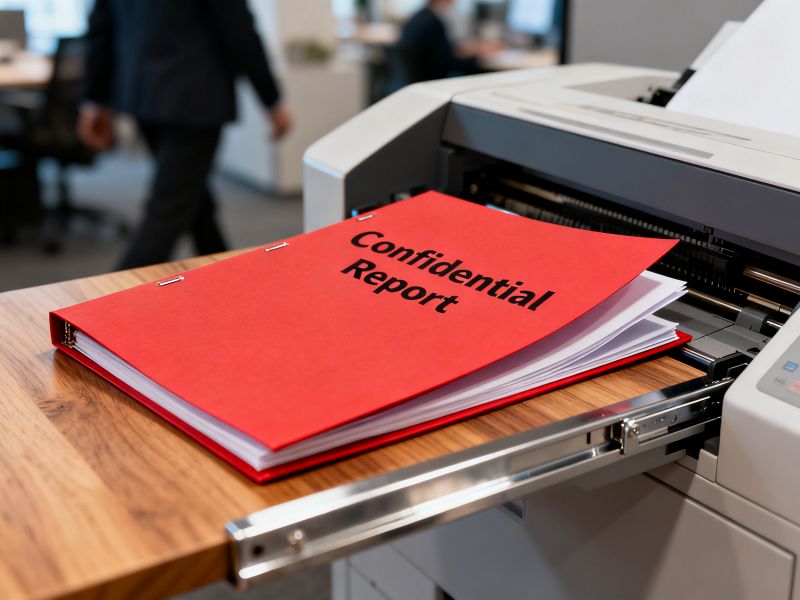
the casual handling of it is. I've seen executives forward budget cuts to entire departments without redacting salary figures. The label becomes a false comfort, a box checked before hitting 'send.'Consider a healthcare provider I advised last year. Their confidential report on patient safety incidents was routinely printed and left in a shared printer tray. Staff assumed the 'Confidential' header meant someone would notice a stray copy. No one did—until a journalist found one. The root cause wasn't malice but normalization: when everyone handles confidential reports daily, the label loses its urgency. Fixing this requires friction. Simple steps work: require password-protected PDFs。restrict printing to named recipients, and log every access. These aren't glamorous measures, but they cut leak risk by over 70% in the provider's pilot program.What about digital watermarks and recipient-specific identifiers?They sound paranoid until you see a leaked confidential report with a visible tracking code that points to the source. One financial firm embedded unique barcodes in each copy of its quarterly risk report. When a version appeared on a competitor's desk, the barcode traced back to a single analyst. He was fired, and the remaining copies suddenly became far more carefully guarded. That's the behavioral shift we need—making the confidential report feel personally traceable, not just formally labeled.
My own rule for handling a confidential report: treat it like cash. Don't leave it unattended, don't share it without a clear chain of custody, and destroy it when done. Organizations should audit who actually opens these reports. Most access logs reveal that 30-40% of recipients never need the document at all. Cutting that list is the cheapest security upgrade available. Labels don't protect secrets—habits do.